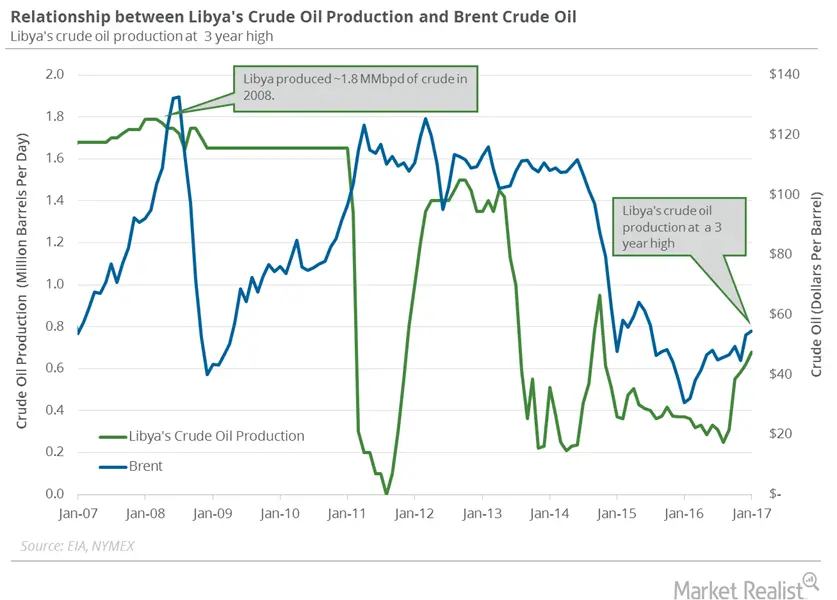
Libya Plans To Double Oil Production In 2017
The question of Libya’s future remains one of the most complex geopolitical puzzles of the 21st century. Following years of instability, the central inquiry is no longer just about who will lead, but rather who possesses the institutional capacity and the economic vision to return prosperity to a nation that was once a beacon of North African wealth. To understand the path forward, we must analyze the intersection of oil sovereignty, institutional reunification, and the role of international stakeholders.
The Foundation of Wealth: Oil and Governance
Libya’s prosperity has always been inextricably linked to its vast hydrocarbon reserves. However, the "resource curse" has manifested here not through lack of funds, but through the fragmentation of the entities that manage them. For prosperity to return, the National Oil Corporation (NOC) and the Central Bank of Libya must operate as unified, technocratic institutions shielded from the zero-sum games of rival political factions.
True economic restoration requires more than just pumping crude; it requires a transparent mechanism for wealth distribution. Until the average citizen in Benghazi, Tripoli, and Sabha feels the tangible benefits of the nation’s oil wealth through infrastructure and public services, political stability will remain a moving target.
Institutional Reconstruction vs. Political Posturing
The road to recovery is frequently blocked by a focus on "personality politics" rather than "institutional building." International observers often look for a single "strongman" or a specific political figure to stabilize the country. History, however, suggests that prosperity in Libya will not be returned by a single individual, but by the successful return of the rule of law and the protection of private property.
Economic diversification is the secondary pillar of this reconstruction. Relying solely on oil makes the Libyan state vulnerable to global price volatility and domestic sabotage. A prosperous Libya must look toward its Mediterranean coastline for trade and tourism, and its vast desert for renewable energy potential.
The International Responsibility
The international community, which played a pivotal role in the 2011 transition, bears a significant responsibility in the current reconstruction phase. However, "help" from abroad has often resulted in a proxy battlefield for regional powers. Prosperity can only return if foreign intervention shifts from military and political interference to technical assistance and investment in human capital.
Rebuilding the Libyan educational system and healthcare infrastructure is as vital as repairing the pipelines. The "brain drain" caused by years of conflict has stripped the country of the very technocrats needed to manage a modern economy. Encouraging the return of the Libyan diaspora is a critical step in reclaiming the country’s future.
Conclusion: A Domestic Mandate
Ultimately, the answer to "who will return prosperity to Libya" lies within its borders. While international mediation is necessary to maintain the ceasefire, the economic roadmap must be indigenous. Prosperity will return when the incentive for cooperation outweighs the rewards of conflict. This requires a national social contract that prioritizes fiscal transparency, local empowerment, and a unified national identity over tribal or regional divisions.
The Libyan dream is deferred, but not lost. With its strategic location, small population, and immense natural wealth, the nation remains a "sleeping giant" in the Mediterranean. The return of prosperity is not a matter of if, but when the political will aligns with the country’s undeniable economic potential.
Subscribe to Our Daily Briefing
Our coverage is tailored for financial professionals, economic policymakers, corporate strategists, and advanced economics students seeking factual, data-driven insights.
Yes, our Enterprise plans provide licensed access to data feeds and APIs, giving you the full flexibility to integrate our economic indicators into your systems.
Our expert team uses accessible language, proprietary infographics, and a comprehensive glossary to translate complex econometric concepts into actionable intelligence.
Definitely. Our platform is fully responsive, meaning all articles, reports, and data visualizations adjust perfectly for seamless reading on desktops, tablets, and smartphones.
We employ rigorous, proprietary methodology and a dedicated team of economists who continuously validate all primary and secondary sources to ensure factual, timely information.
You gain unlimited access to our entire archive of policy analysis, the daily market briefing, all research reports, and specialized features like the interactive data dashboard.